At first glance, a map and a work of art might seem like two completely different things.
A map is supposed to be functional. It shows direction, distance, structure, and geography. It helps you get from one place to another.
A work of art, on the other hand, is emotional. It is meant to be experienced, interpreted, and felt. It exists to express meaning, not just information.
But in hand-drawn cartography, that line disappears.
A truly crafted map can do both. It can guide you through a place and also connect you to what that place represents in your life.
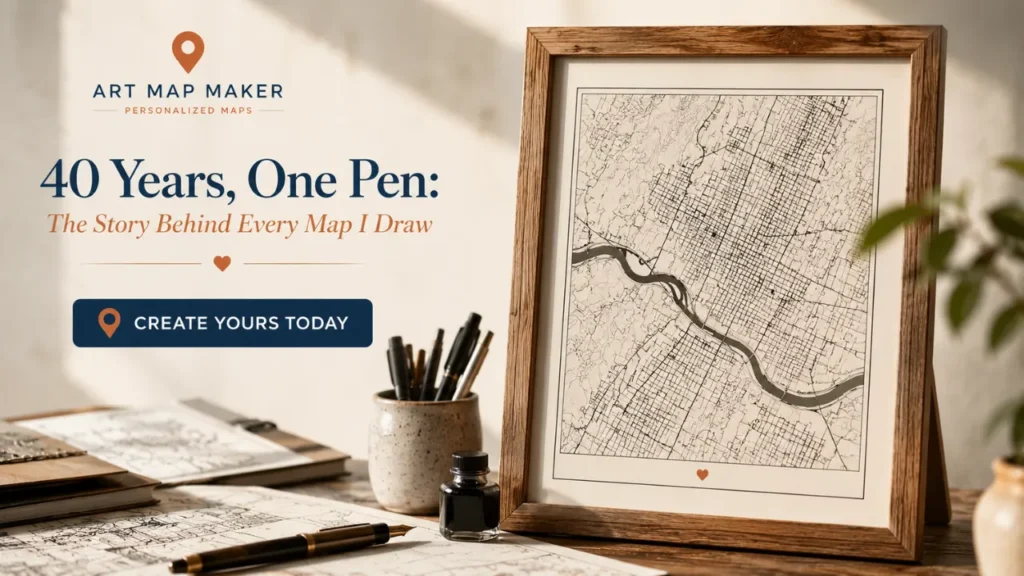
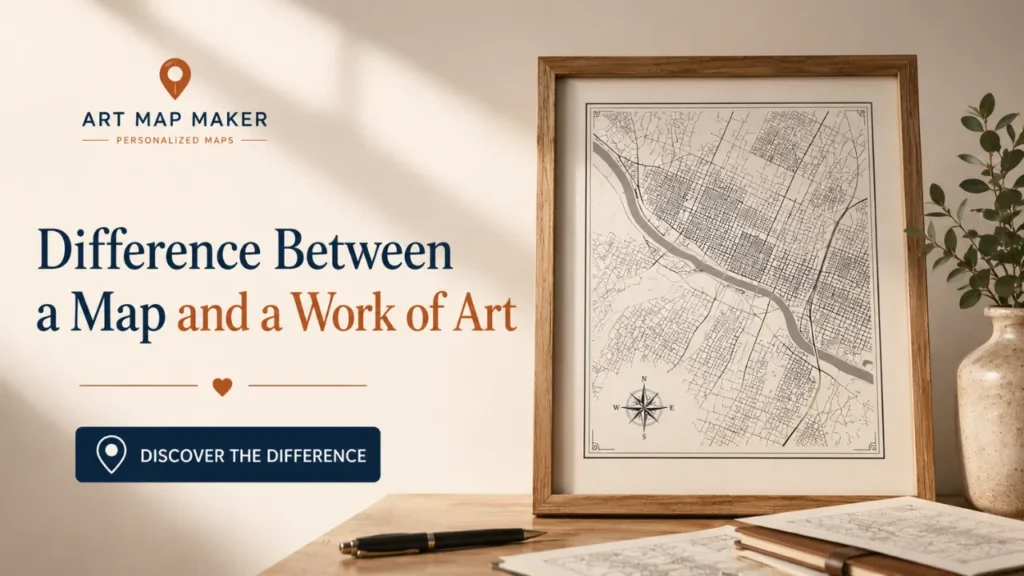
At Art Map Maker, this intersection is the foundation of every piece. Each map is created as a hand-drawn cartographic artwork, combining traditional pen-and-ink technique with fine art composition to turn geography into something deeply personal and collectible.
Maps Are Built on Function. Art Is Built on Meaning.
The original purpose of a map is clarity.
It tells you where things are. It organizes space. It reduces complexity into something readable. Roads become lines. Cities become labels. Borders become structure.
That function is powerful, but it is also limited.
A map that only serves function will always feel temporary. It is useful in the moment, but it rarely leaves a lasting impression.
Art works differently.
Art does not just show you something. It asks you to feel something. It slows your attention down. It adds emotional weight to visual information.
When these two ideas come together, something rare happens. A map stops being just a tool and becomes an object of memory.
What Changes When a Map Is Drawn by Hand
The difference begins with intention.
A digital map is assembled by code. It is generated from data layers, algorithms, and automated design systems. Every output is consistent, scalable, and repeatable.
A hand-drawn map is not.
It is constructed line by line, decision by decision. Every street, coastline, and label is placed by an artist who is actively interpreting the space. There is judgment involved. There is restraint involved. There is even emotion involved.
That human input changes everything.
A hand-drawn map carries imperfections that make it feel alive. It carries rhythm instead of rigidity. It carries personality instead of uniformity.
It is not just a representation of geography. It is a translation of experience.
Why a Map Can Be a Work of Art
To understand why a map can be art, you have to stop thinking of geography as purely technical.
A city is not just coordinates. It is memory, culture, movement, and identity. A coastline is not just a boundary. It is history, trade, discovery, and life shaped by water and land.
When a cartographer interprets these elements through drawing, they are not just copying reality. They are selecting what matters most.
That act of selection is what defines art.
In traditional cartography, especially hand-drawn work, composition matters just as much as accuracy. Typography, spacing, contrast, and visual hierarchy all influence how a viewer experiences the piece.
This is why no two hand-drawn maps are ever truly identical, even when they represent the same location.
Where Function Ends and Emotion Begins
A functional map answers one question: Where is it?
A work of art answers a different one: What does it mean to you?
That shift is subtle but powerful.
A custom map of a city where you grew up is not just a reference point. It becomes a reflection of identity. A map of a wedding location is not just geography. It becomes a memory preserved in physical form. A map of a home or estate becomes something closer to a legacy object than a decorative print.
This is where the dual nature of hand-drawn cartography matters most.
It allows a single piece to exist in two worlds at once.
The Role of Craft in Turning Maps Into Art
Not every map becomes art. Craft is what makes the difference.
In traditional hand-drawn cartography, tools matter. Pen-and-ink linework creates texture that digital brushes cannot replicate. Mechanical lettering ensures precision without losing character. Hand-applied shading adds depth that feels tactile rather than flat.
These choices are not aesthetic accidents. They are deliberate techniques refined over decades of practice.
The result is a map that feels grounded in both discipline and creativity.
At Art Map Maker, this process is central to the philosophy: geography is not just reproduced, it is composed as fine art through traditional methods and long-form craftsmanship.
Why This Difference Still Matters Today
In a world filled with instant imagery, the difference between a map and a work of art matters more than ever.
Most digital visuals are designed to be consumed quickly and forgotten. They are optimized for speed, not permanence. But a hand-drawn map invites a different kind of attention.
It asks you to pause.
It asks you to recognize a place not just as a location, but as a story.
And that is why the best maps today are no longer just about navigation.
They are about connection.