A map can show you where a place is. But a hand-drawn map can show you why that place matters.
That difference has guided my work for more than 40 years. Long before digital map tools made geography instant and ordinary, I learned the slower craft of cartography. I learned how a line could carry meaning, how lettering could shape a viewer’s attention, and how a map could become something far more lasting than a record of roads, rivers, or boundaries.
At Art Map Maker, every piece begins with that belief. I do not create automated map posters or software-generated wall decor. I create hand-drawn cartographic art, using traditional techniques that turn locations into personal, collectible works of fine art. This artist-first philosophy is central to the brand’s positioning as a handmade cartographic art studio, not a mass-produced map company.
The Beginning of a Lifelong Cartographic Practice
My relationship with mapmaking began with a respect for precision, but it grew into something much deeper.
Traditional cartography is not only about accuracy. It is about interpretation. A cartographer must decide what to show, what to soften, what to emphasize, and how to guide the eye across a landscape. Those choices are not random. They come from training, patience, and years of looking closely at place.
My foundation in traditional methods was shaped through formal study under Dartmouth College cartographer Van English. That training gave me more than technical skill. It gave me a standard. Every map should have structure, balance, clarity, and grace.
Over time, I came to understand that the best maps do not simply explain geography. They preserve memory.
Why I Still Draw Maps by Hand
Today, anyone can open a screen and generate a map in seconds. That kind of map has a purpose. It can help you drive to dinner, check a property line, or find the fastest route across town.
But that is not what I make.
A digital map is built for speed. A hand-drawn map is built for meaning.
When I draw by hand, I am not just copying spatial data. I am studying the character of a place. I look at the rhythm of streets, the shape of coastlines, the movement of neighborhoods, and the emotional weight a location may hold for the person who will live with the finished artwork.
That is why pen-and-ink cartography still matters. The human hand brings judgment, texture, and restraint. It allows the finished piece to feel considered rather than generated.
A computer can display coordinates. It cannot understand why a childhood hometown, a wedding destination, an estate, or a favorite city deserves to be remembered.
The Pen-and-Ink Process
Every original piece begins slowly.
Before ink touches the surface, there is research, planning, and composition. The map has to work as geography, but it also has to work as art. The eye needs a clear path. The spacing needs room to breathe. The labels must feel intentional. The visual weight must be balanced.
Then comes the drawing.
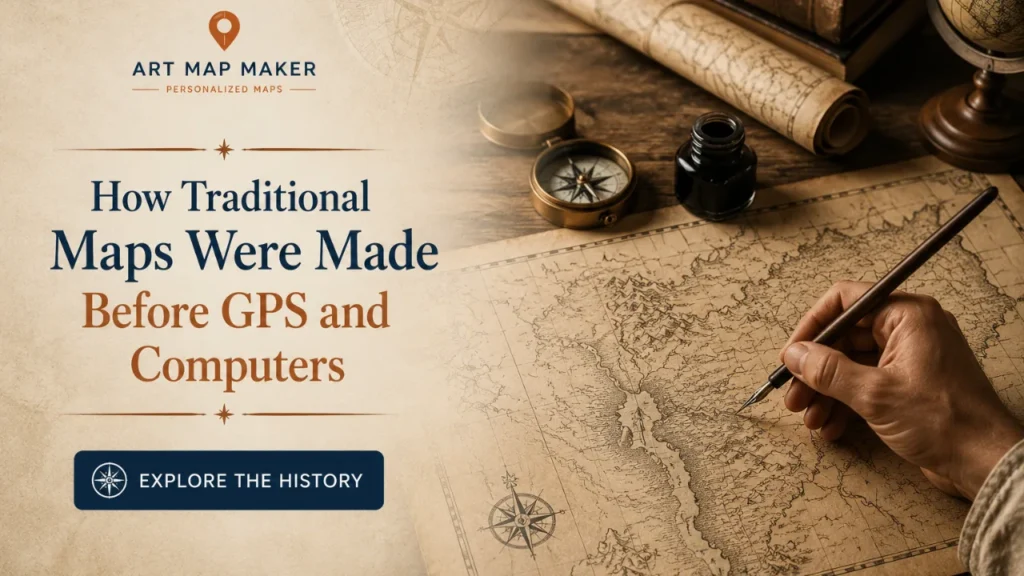
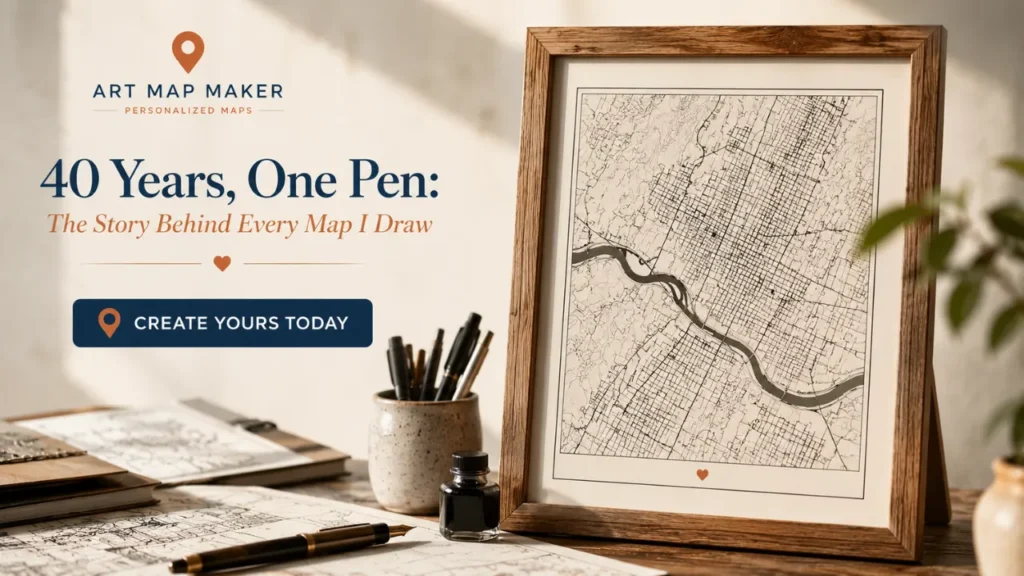
Using physical ink, mechanical lettering, and hand-applied shading, I build the map line by line. Some areas require careful restraint. Others need stronger detail. A coastline may need a softer touch. A city grid may need disciplined structure. A mountain range, river, or neighborhood boundary may need tone and texture.
This is where time becomes part of the value.
A hand-drawn map cannot be rushed into existence. It has to be made with patience. The process may take longer than digital production, but that slower pace is exactly what gives the work its character.
Exceptional artwork takes time because every decision matters.
More Than Decoration
Many people first look for map art because they need something meaningful for a wall. Maybe it is for a home office in Summerlin, a living room in Henderson, a corporate space in Las Vegas, or a personal library. They want something refined, but they do not want generic art that looks like it came from the same catalog everyone else uses.
That is where custom map art becomes powerful.
A map can represent a place where a family began. It can honor a city that shaped a career. It can preserve the land around an estate, mark a personal journey, or celebrate a location tied to a major life event.
In that sense, a map becomes more than decor. It becomes a visual archive.
It tells a story without needing to explain too much. Guests notice it. Clients ask about it. Family members recognize places inside it. Over time, it becomes part of the room’s identity.
The Difference Between a Print and a Collectible
There is a reason I treat each piece with the care of fine art.
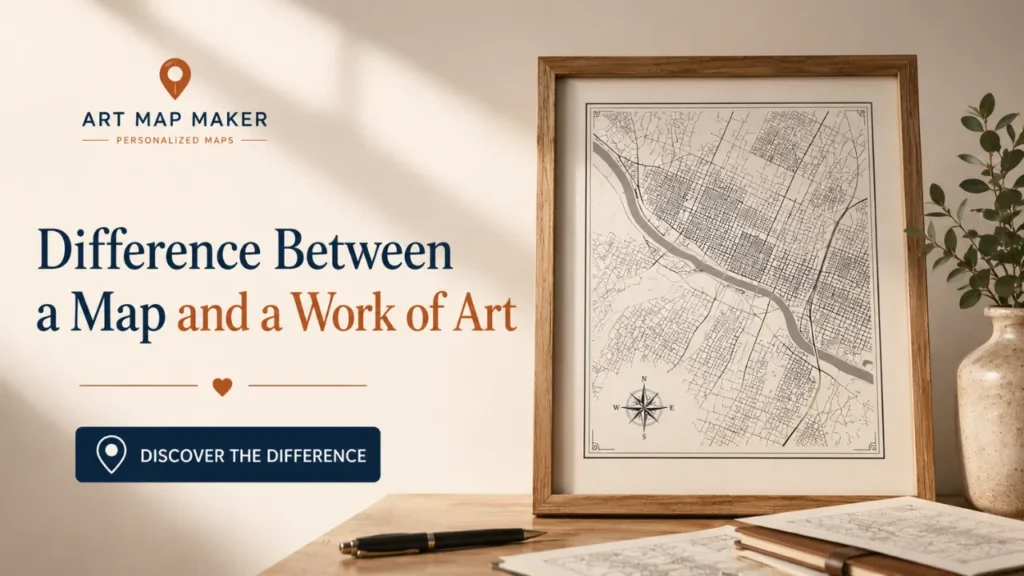
A mass-produced map poster is made to fill space. A hand-drawn cartographic print is made to hold significance. The difference is not only in appearance. It is in the process, the authorship, and the intention behind the work.
Each fine art print is individually signed by the artist, which shifts the piece away from simple wall decoration and toward something more personal and collectible. The project brief identifies artist-signed prints, custom commissions, and the preserved pen-and-ink process as major points that separate Art Map Maker from automated software-based map companies.
That signature matters because it connects the finished work back to a real hand, a real process, and decades of cartographic experience.
Why the Old Ways Still Matter in 2026
In 2026, speed is everywhere. Most things are designed to be instant, editable, and replaceable. That makes handmade work feel even more important.
A traditional map asks for attention. It rewards close looking. It carries evidence of the artist’s hand. It offers a sense of permanence in a world that often feels temporary.
That is why I still use a pen.
Not because technology does not exist. Not because digital tools are unavailable. But because some stories deserve to be drawn with care.
For more than 40 years, I have watched lines become landscapes, cities become keepsakes, and personal places become fine art. Every map begins with geography, but it ends with something more lasting.
A place remembered.
A story preserved.
A legacy drawn by hand.